 VerifyRishta
Navratri 2026
Maa Brahmacharini: What Does the Second Day of Navratri Teach About Patience?
On this page
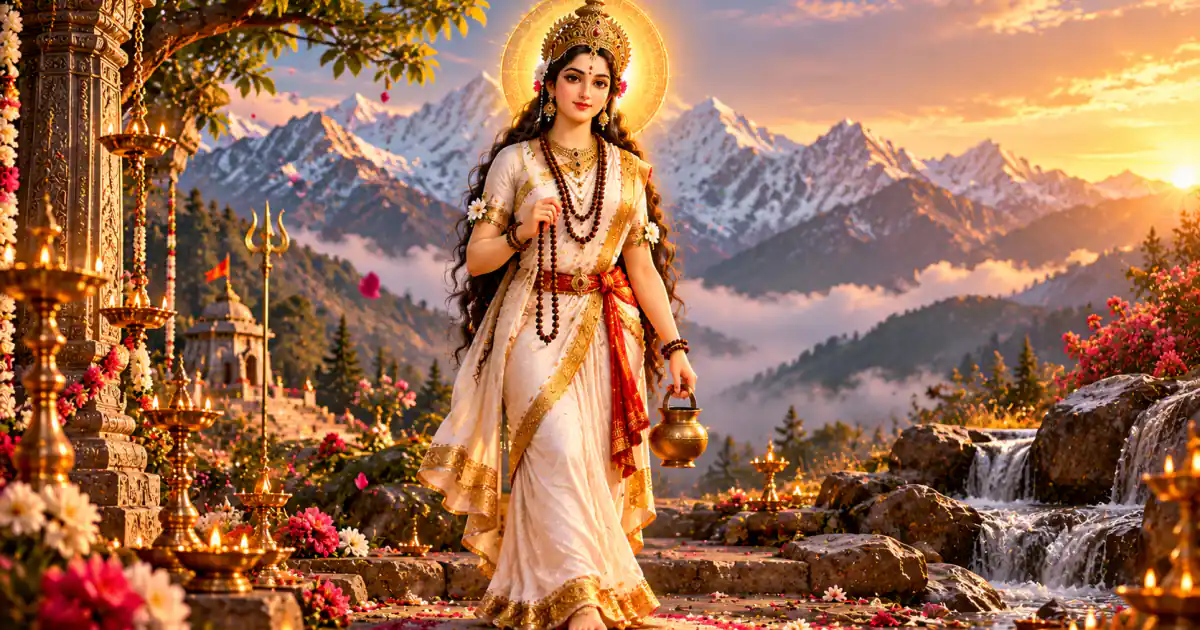
The second day of Navratri is dedicated, in the Navadurga tradition, to Maa Brahmacharini. Her name is associated with a life of spiritual discipline and dedicated practice. She is often shown walking barefoot, holding a rosary and a kamandalu, or water pot.
The story of her tapasya
Many devotional accounts connect this form with Parvati's tapasya, or intense spiritual austerity, undertaken in pursuit of her union with Shiva. The story is remembered not simply as a tale of waiting, but as an account of commitment and focus. Different texts and retellings present the details in different ways, so the broad devotional theme is more reliable than any single version.
What the rosary and water pot mean
The rosary is commonly associated with prayer or repetition, while the water pot suggests the ascetic life. Together they support a wider reading of Brahmacharini as a symbol of patience, self-control and devotion. For worshippers, the second day can be an occasion to renew a personal vow or approach spiritual practice with greater sincerity.
Discipline and fasting
Many devotees connect Navratri fasting with discipline. But fasting rules vary, and not everyone fasts. People with medical needs, children, older adults and pregnant people should seek professional guidance rather than follow restrictive food rules because of social pressure.
What the day can teach
In a world that rewards instant results, her story offers a different model: meaningful commitments often require consistency. That is a reflective reading, not a promise that a ritual guarantees a specific outcome.
Devotees may offer prayers, flowers or simple food according to their family tradition. The essence of the day is less about copying a perfect social media ritual and more about the values the Goddess represents: discipline without display, and devotion sustained over time.
The bottom line
Maa Brahmacharini turns patience into a kind of strength. Her day asks for steady effort rather than quick results.
Read about all nine forms of Maa Durga, the first day's goddess, Maa Shailputri, and the next, Maa Chandraghanta. Start with our complete Navratri guide.
Frequently asked questions
What does Maa Brahmacharini represent?
She is commonly associated with tapasya, devotion, patience and spiritual discipline.
Which day of Navratri is dedicated to Brahmacharini?
The second day in the widely followed Navadurga sequence.
Do all devotees fast on the second day?
No. Fasting is a personal or community practice and is not observed by everyone.
This is general information, not legal advice. For your own situation, speak to a lawyer.
About the author
Verify Rishta Editorial Team, Editorial team
The VerifyRishta editorial team writes and reviews guides on marriage background verification in India.