 VerifyRishta
Navratri 2026
Maa Chandraghanta: Why Is the Goddess Shown with a Bell-Shaped Moon?
On this page
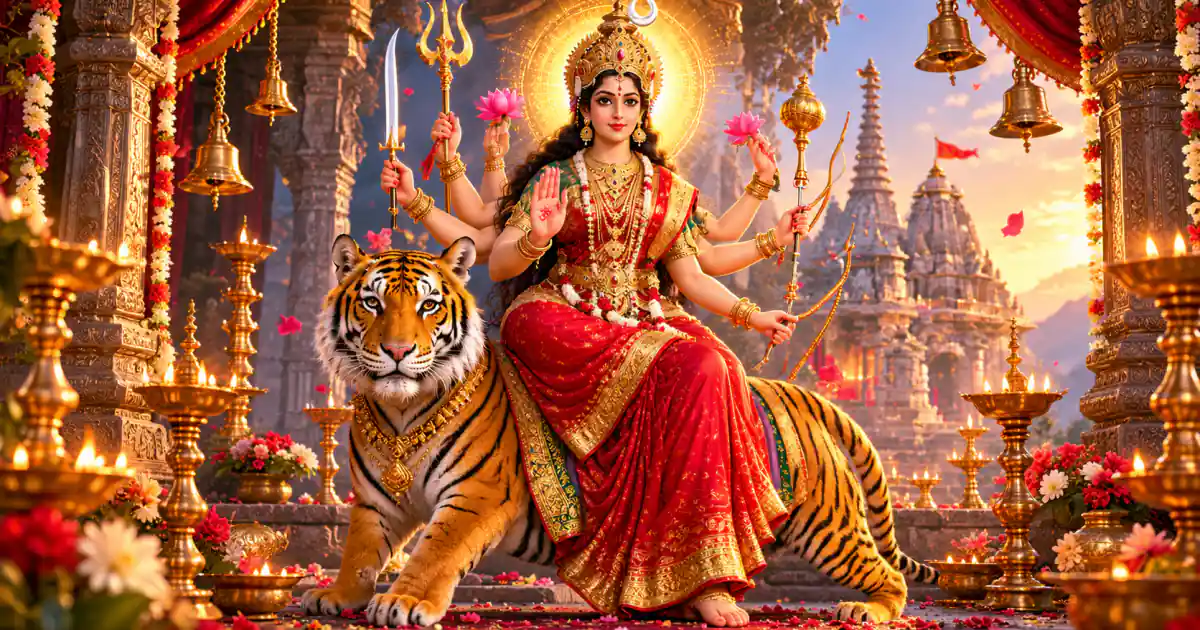
Maa Chandraghanta is worshipped on the third day in the widely followed Navadurga sequence. Her name refers to the bell-shaped crescent moon associated with her forehead. Her iconography often shows a warrior Goddess with many arms, riding a lion or tiger, although artistic depictions vary.
Why a bell?
The bell is a striking image because it can suggest both sound and alertness. In devotional explanations, Chandraghanta is associated with courage, readiness and protection. Her fierce appearance does not mean anger for its own sake; it communicates the power to confront danger and defend what is right.
One form, several stories
Some retellings connect this form with Parvati after her marriage to Shiva, while other popular summaries focus on her warrior aspect. Mythological stories develop through many texts, oral traditions and regional retellings. No short version online is the only accepted story.
How the day is observed
On the third day, devotees may recite prayers, offer flowers or follow local puja practices. Some traditions connect particular colours or offerings with the day, but these vary. If you follow a daily colour chart, check which year and tradition it is based on.
Courage, not aggression
Her imagery invites a distinction between aggression and courage. Courage is not the absence of fear; it is the ability to act with clarity when something important needs protection. That is a modern reflection inspired by the symbolism, not a promised religious result.
The bottom line
The third night brings a new quality into the Navratri sequence: alertness and action. After the grounding of Shailputri and the discipline of Brahmacharini, Chandraghanta stands for the readiness to face a challenge.
Read about all nine forms of Maa Durga and common Navratri myths and facts. Start with our complete Navratri guide.
Frequently asked questions
What does Chandraghanta mean?
The name refers to a bell-shaped crescent moon associated with the Goddess's forehead.
Which day is Maa Chandraghanta worshipped?
The third day of the widely followed Navadurga sequence.
What does Maa Chandraghanta symbolise?
Devotional interpretations commonly associate her with courage, alertness and protection.
This is general information, not legal advice. For your own situation, speak to a lawyer.
About the author
Verify Rishta Editorial Team, Editorial team
The VerifyRishta editorial team writes and reviews guides on marriage background verification in India.