 VerifyRishta
Navratri 2026
Navratri Colours: What Do They Mean, and Are the Daily Colours Fixed?
On this page
Every Navratri season, colour charts circulate on social media, listing what to wear on each day. These guides are popular and practical, but one detail is often missed: colour lists can vary by year, region and source. They are not universal religious rules.
What the colours can mean
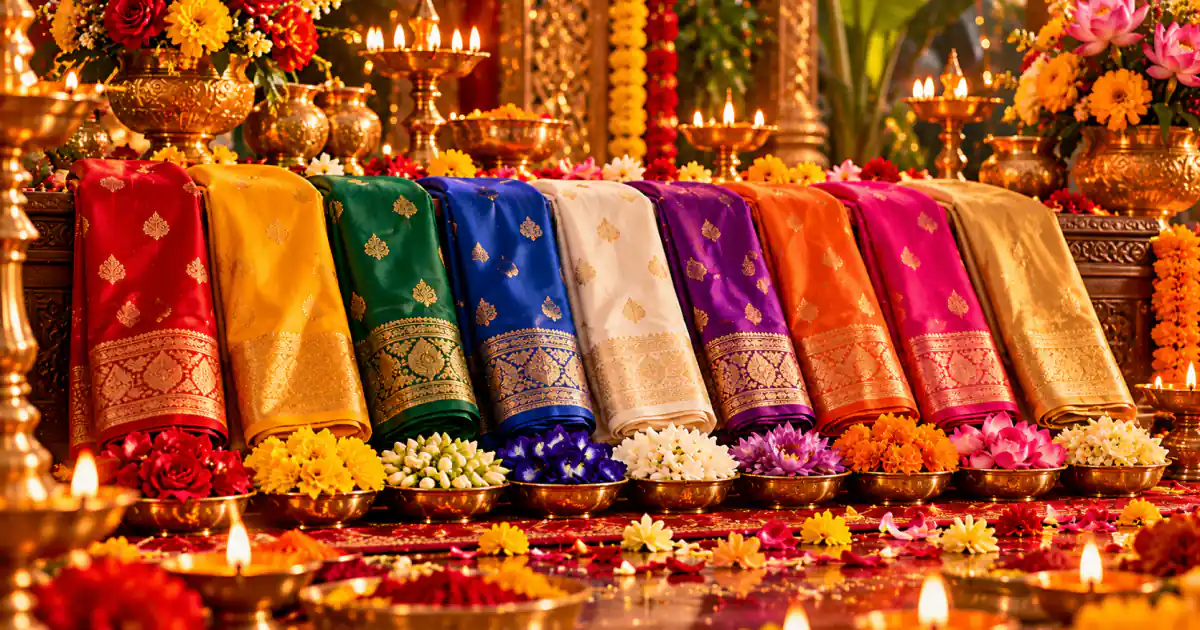
Colours carry cultural and symbolic associations in many traditions. White may be linked with peace or purity, red with energy or auspiciousness, green with growth, and yellow with brightness or learning. These are broad associations, not fixed definitions that apply the same way everywhere.
Why the daily lists change
Some lists assign a colour to each day based on the weekday on which Navratri begins, while other sources use different conventions. Colours traditionally linked with particular forms of the Goddess can also get mixed up with annual outfit calendars. These are not necessarily the same system.
How to use a colour chart
If you follow a daily colour chart, pick a reliable regional source and check which year it refers to. Last year's chart may not apply this year. When two charts disagree, first check whether they use the same year and tradition before deciding one is wrong.
The wrong colour is not bad luck
Clothing colour is not a reliable measure of devotion. Many people wear the suggested colour for fun, community spirit or family tradition; others choose differently for personal, practical or cultural reasons. Nothing in the tradition makes a different colour a source of bad luck.
Why the colours still matter
They create a shared visual rhythm, help families take part in the festival and connect each day with themes such as courage, peace or renewal. Their meaning is strongest when the context is clear rather than presented as a universal rule.
The bottom line
Enjoy the colours as a custom, not a commandment. Explaining the variation, rather than declaring one community wrong, is both more accurate and kinder.
Read about the nine forms of Maa Durga, common Navratri myths and facts, and our complete Navratri guide.
Frequently asked questions
Are Navratri colours the same every year?
Popular annual colour calendars can change by year and may vary by source or regional convention.
Do Navratri colours have religious meaning?
Colours can carry cultural and devotional associations, but interpretations and calendars vary.
Is it bad luck to wear a different colour?
There is no basis for presenting that as a universal fact. Clothing customs differ.
This is general information, not legal advice. For your own situation, speak to a lawyer.
About the author
Verify Rishta Editorial Team, Editorial team
The VerifyRishta editorial team writes and reviews guides on marriage background verification in India.