 VerifyRishta
Complete guide: Navratri 2026
Why Is Navratri Celebrated for Nine Nights? The Story, Meaning and Traditions
On this page
Why does one of India's most widely observed festivals unfold over nine nights? The answer is not just a calendar calculation. Navratri brings together stories of divine power, regional traditions, seasonal change and personal devotion.
What does the word Navratri mean?
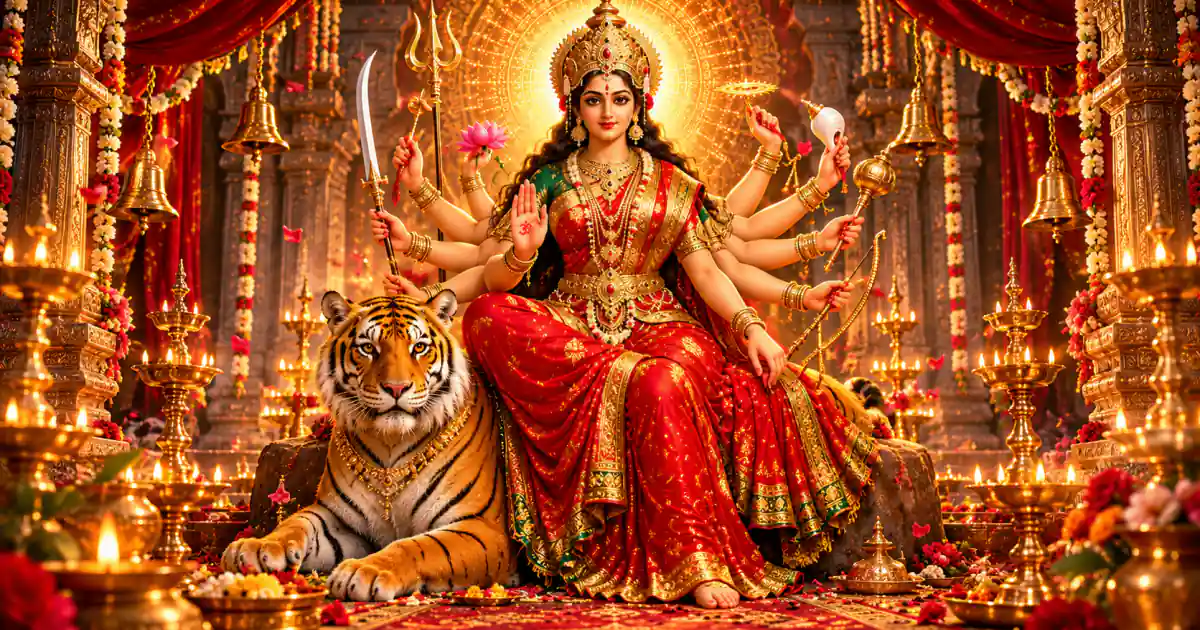
The word Navratri comes from two Sanskrit-derived elements commonly explained as nav, meaning "nine", and ratri, meaning "night". Across these nights, devotees honour Shakti, the divine feminine power, often through the forms of Goddess Durga. The festival is observed in different ways across India, so there is no single ritual routine followed by every family.
The story of Durga and Mahishasura
One well-known account centres on Goddess Durga's battle with Mahishasura, a powerful buffalo demon. In the devotional tradition, Durga's victory represents the triumph of dharma and good over destructive forces. For many devotees, the story also offers a personal metaphor: courage and clarity can help us confront the difficult forces within ourselves.
During the nine nights, many households worship the Goddess in nine forms, one for each day. Our guide to the nine forms of Maa Durga explains each one.
Navratri looks different across India
Navratri is not celebrated identically everywhere. In Gujarat, Garba and Dandiya Raas bring communities together through music and dance. In West Bengal, Durga Puja features elaborate pandals, artistic images and community worship.
In parts of North India, the period is associated with fasting, Ramlila and the wider Dussehra season. In parts of South India, families arrange Golu or Kolu displays of dolls and figurines. Read more about how Navratri is celebrated across India.
Chaitra Navratri and Sharad Navratri
Two major Navratri observances are Chaitra Navratri in spring and Sharad or Shardiya Navratri in autumn. The autumn festival is especially prominent in many parts of India. Dates follow the Hindu lunisolar calendar, so the exact dates on the Gregorian calendar change each year. Check a trusted local panchang for this year's dates and timings.
So, why nine nights?
Religious narratives and ritual traditions provide the framework; the deeper meaning is interpreted in different ways by different communities. For some, the nine nights are a period of prayer and discipline, often with a Navratri fast. For others, they are a celebration of art, family, music and community. Many experience all of these together.
The bottom line
Navratri's lasting appeal may lie in that combination: a shared festival with many local expressions, and a story that invites people to reflect on strength, renewal and the victory of good over evil.
Read about the nine forms of Maa Durga, common Navratri myths and facts, and what the Navratri colours mean.
Frequently asked questions
Is Navratri celebrated twice a year?
Two widely known observances are Chaitra Navratri in spring and Sharad Navratri in autumn. Other regional observances of Navratri also exist.
What does Navratri mean?
Navratri is commonly translated as "nine nights".
Are Navratri traditions the same across India?
No. Worship, food, dance, public celebrations and regional emphasis vary by community and family.
Sources and further reading
- Navratri: Nine nights of divine celebration, Incredible India, Ministry of Tourism (accessed 2026-10-12)
This is general information, not legal advice. For your own situation, speak to a lawyer.
About the author
Verify Rishta Editorial Team, Editorial team
The VerifyRishta editorial team writes and reviews guides on marriage background verification in India.