 VerifyRishta
Navratri 2026
Maa Kushmanda: Did the Universe Begin with a Divine Smile?
On this page
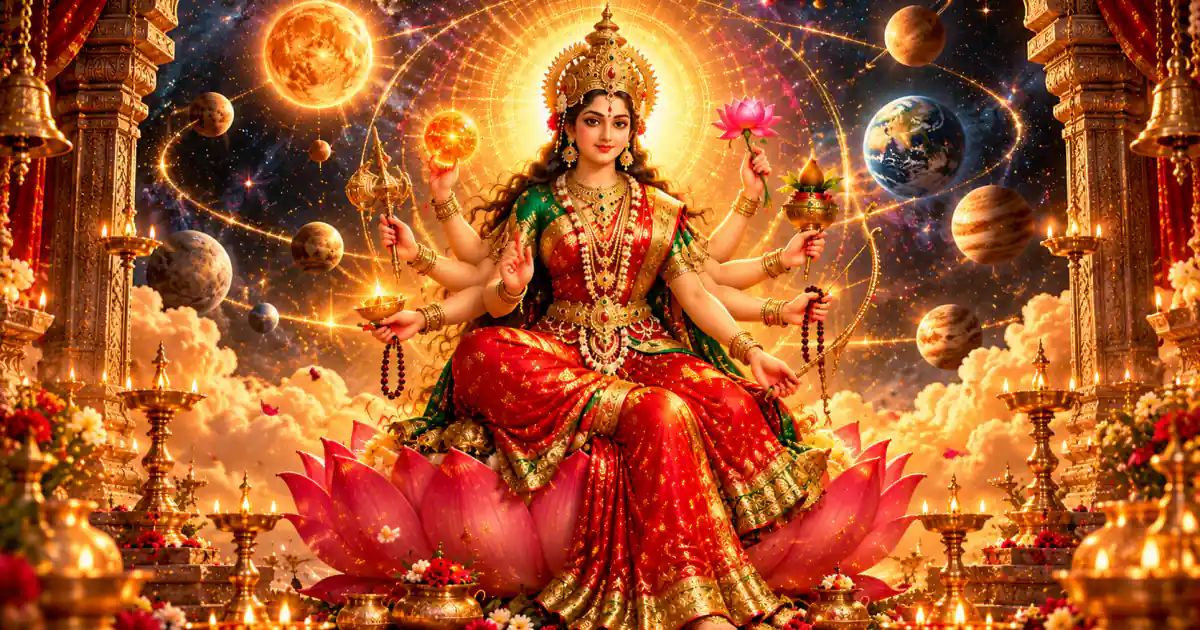
The fourth day of Navratri is associated with Maa Kushmanda in the Navadurga sequence. Popular devotional explanations connect her name with the cosmic egg and describe her as the Goddess whose smile brought light and creation to the universe. This is a sacred narrative within Hindu devotional tradition, not a scientific account of the universe's origin.
Faith and science answer different questions
The distinction matters. Religious stories often communicate meaning through imagery, metaphor and divine action. Cosmology, by contrast, studies the physical universe through observation and scientific models. The religious story can be told clearly and respectfully without presenting it as a tested scientific fact.
Her imagery
Maa Kushmanda is often depicted with many arms and associated with radiance, energy and creative power. Some traditions describe her as dwelling within the sun or connected with its brilliance. Specific details vary by text, region and artistic tradition.
Her place in the sequence
Within the nine forms, Kushmanda can be understood as the force of creation and vitality. After the themes of grounding, discipline and courage on the first three days, this form points toward the energy needed to bring something into existence. Devotees may connect that idea with gratitude for life, creative work or the natural world.
How the day is observed
Worship on this day varies by family and region. People may offer prayers, flowers, lamps or food according to custom. Some devotional contexts express hopes for wealth, children or success through these offerings; these are beliefs and hopes, not outcomes any ritual can guarantee.
The bottom line
So, did the universe begin with a divine smile? In the devotional story, the smile is a powerful image of creation. The most accurate answer is to treat it as a religious belief and symbolic narrative, and keep scientific explanations in their own category. That approach honours faith and respects readers who arrive with different questions.
Read about all nine forms of Maa Durga, the next day's goddess, Maa Skandamata, and common Navratri myths and facts. Start with our complete Navratri guide.
Frequently asked questions
What is Maa Kushmanda known for?
Popular devotional accounts associate her with cosmic creation, light and creative energy.
Which day is dedicated to Maa Kushmanda?
The fourth day in the widely followed Navadurga sequence.
Is the Kushmanda story a scientific explanation of the universe?
No. It is a religious narrative; scientific cosmology uses evidence-based physical models.
This is general information, not legal advice. For your own situation, speak to a lawyer.
About the author
Verify Rishta Editorial Team, Editorial team
The VerifyRishta editorial team writes and reviews guides on marriage background verification in India.